When we think about the rapid transformation of smart cities across the GCC—from the soaring skylines of Dubai and Riyadh to the sprawling industrial corridors of Qatar and Oman. But some of the most critical engineering feats keeping these megaprojects alive are right beneath our feet.
In municipal infrastructure, an access cover is far more than a piece of iron over a hole. It is a critical line of defense ensuring public safety, structural integrity, and smooth utility operations. Historically, the gold standard for these systems has been the British and European Standard BS EN 124.
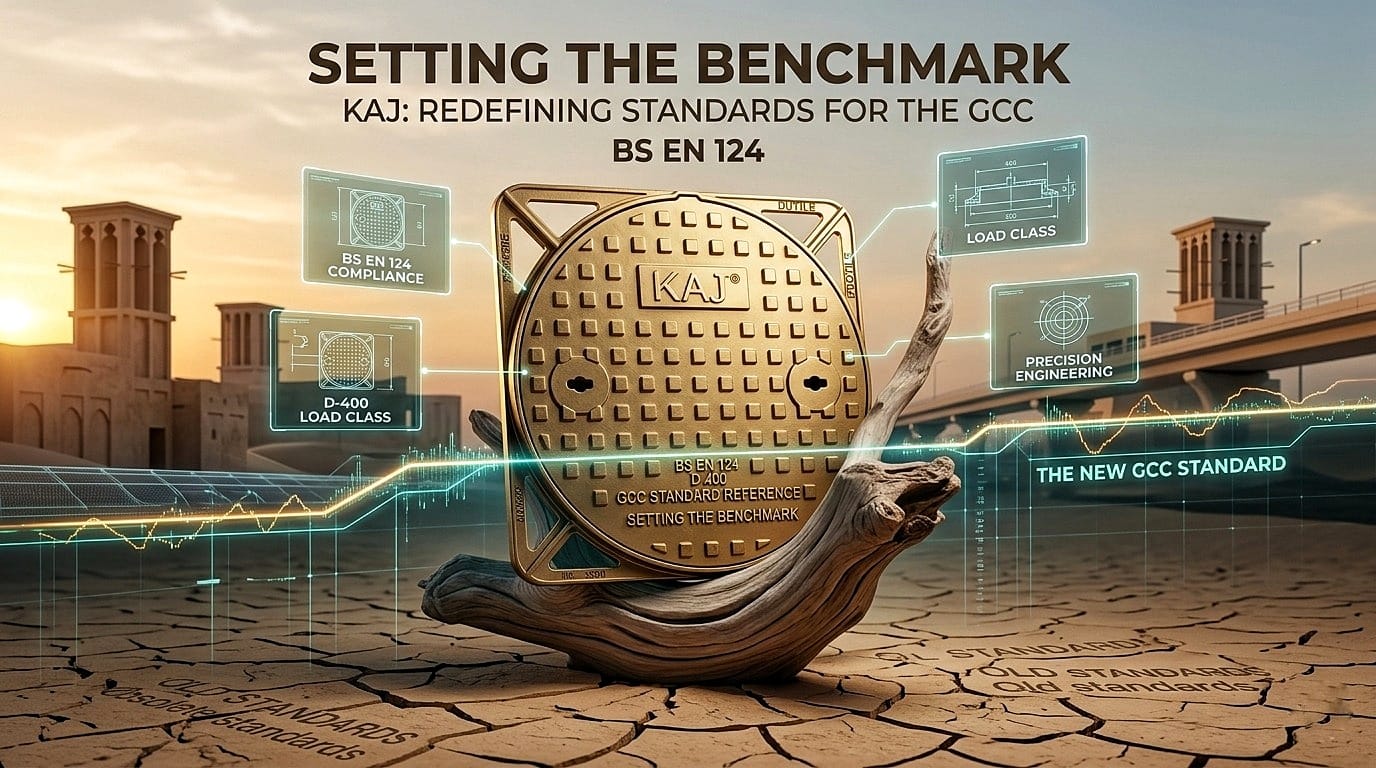
However, translating a standard designed for temperate European climates into the punishing realities of the Middle East is no small task. Here is how KAJ Manhole Covers didn't just adopt BS EN 124 in the GCC market—they redefined it.
The Core Challenge: The European Standard vs. The Gulf Climate
The BS EN 124 standard categorizes access covers and gully grates into six strict load classes, ranging from light pedestrian paths to heavy-duty airport tarmacs:
| BS EN 124 Class | Test Load Capacity | Primary Installation Areas |
| BS EN 124 Class | Test Load Capacity | Primary Installation Areas |
|---|---|---|
| A15 | 15 kN (1.5 Tons) | Pedestrian zones, walkways, and bicycle paths |
| B125 | 125 kN (12.5 Tons) | Car parks, residential driveways, pedestrian areas with light vehicle access |
| C250 | 250 kN (25 Tons) | Kerbside channels of roads, slow-moving commercial traffic zones |
| D400 | 400 kN (40 Tons) | Main road carriageways, highways, and hard shoulders for all vehicles |
| E600 | 600 kN (60 Tons) | High wheel-load environments, industrial docks, loading bays |
| F900 | 900 kN (90 Tons) | Heavy industrial sites, military installations, and aircraft pavements |
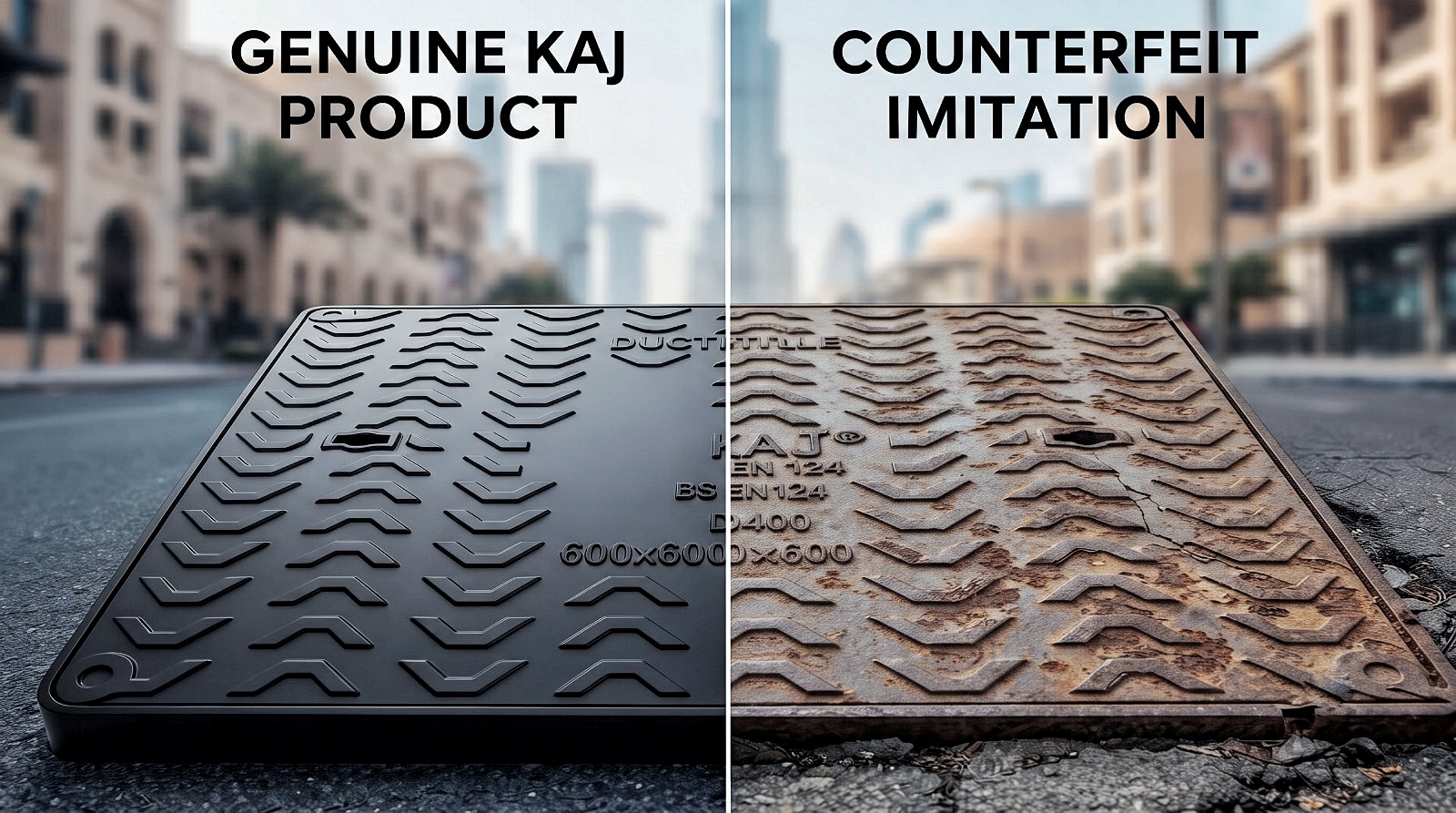
While these static load testing categories are clear on paper, the GCC presents an entirely different beast. Standard castings that easily pass tests in London can fail prematurely under the extreme heat, blistering humidity, aggressive subsoil salinity, and massive dynamic traffic loads unique to the Gulf.
How KAJ Redefined the Standard for the Region
KAJ looked at BS EN 124 not as a final destination, but as a baseline. To serve regional heavyweights like Al Ain Municipality and major utility networks across the UAE, KAJ engineered past the bare minimums.
1. Advanced Metallurgy (ISO 1083 / Grade 500/7)
Rather than relying on basic grey iron, which can crack under extreme thermal expansion, KAJ manufactures its systems using high-grade KAJ Round Manhole Covers Ductile Iron (Grade 500/7). This material provides distinct structural flexibility, allowing the metal to breathe during intense summer temperature swings (often exceeding 50°C/122°F on asphalt surfaces) without losing structural integrity.
2. Beyond Static Loads: Corner & Dynamic Stress Engineering
A major limitation of standard BS EN 124 testing is its reliance on static center-pad loads. In reality, most failures on fast-moving GCC highways happen when heavy transport trucks clip the corners of a frame, sending immense dynamic shockwaves through the unit. KAJ solves this by adding reinforced corner stability and thicker, anti-rocking seatings to handle high-speed torque and heavy braking zones.
3. Climate-Specific Protective Coatings
The coastal areas of the GCC suffer from incredibly corrosive air and high water tables. KAJ combat this by offering specialized chemical treatments:
4. Security and Noise Reduction
With modern smart cities prioritizing pedestrian comfort, KAJ incorporates integrated, secure locking systems (such as 4-point Stainless Steel Allen screw security) and gas/watertight seals. This prevents unauthorized utility access while eliminating the infamous "clanking" sound of heavy traffic rolling over ironwork.
A Proven Infrastructure Partner across the GCC
From municipal sewer systems and telecom corridors to high-load airport tarmac installations, KAJ’s commitment to premium manufacturing has fundamentally changed how regional engineers specify access solutions.
By taking a robust European standard and injecting it with heavy-duty, climate-focused engineering, KAJ has proven that the best way to safeguard the cities of tomorrow is to build an unshakeable foundation today.