When most brands talk about "premium," they point to the finished product—the polished finish, the sleek logo, or the heavy-feeling packaging. But true premium quality isn’t something you apply at the end like a coat of paint. It is baked in from day one.
At KAJ, we define premium not by marketing language, but by engineering integrity, material uncompromisingness, and process control.
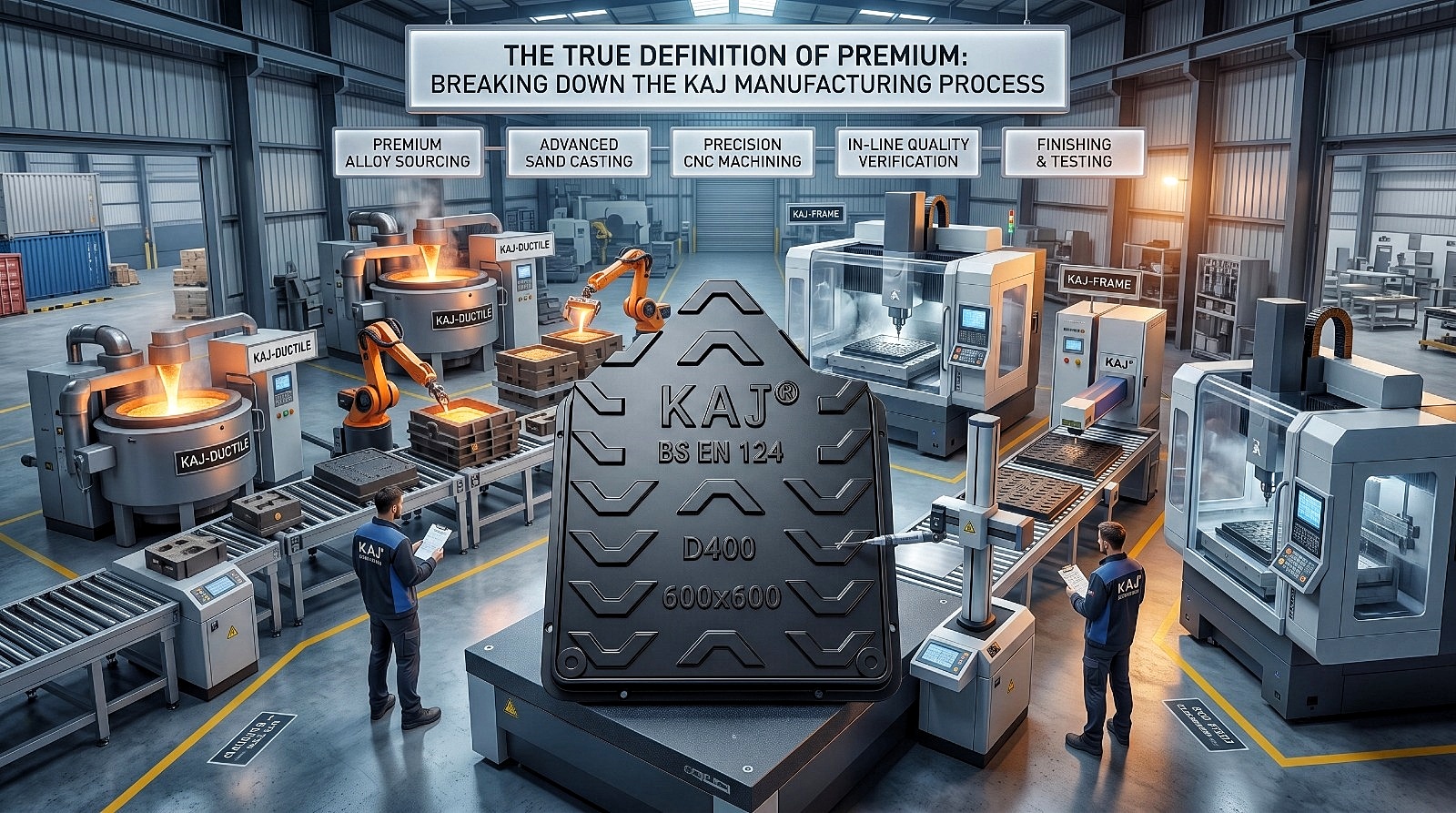
To understand what sets a high-grade product apart from standard mass manufacturing, you have to look past the spec sheet and dive into the factory floor. Here is a step-by-step breakdown of the KAJ manufacturing process—and how every phase shapes our definition of true quality.
1. Material Selection: Quality Starts at the Source
You cannot build a premium product on a compromise. Most standard manufacturing relies on commercial-grade raw materials to keep costs down, accepting minor impurities and natural variances.
At KAJ, our process begins with strict material sourcing criteria:
Premium isn't just about using good materials; it's about rejecting bad ones before they reach production.
2. Precision Engineering & Tooling
The gap between a good product and a phenomenal product often comes down to fractions of a millimeter. Standard production tolerances frequently accept variances up to 0.5mm. While acceptable for everyday items, those micro-variances accumulate over time, leading to early wear, loose fits, or structural fatigue.
Standard Tolerances: [----- ±0.5mm -----] --> Accumulates play & wear
KAJ Precision Spec: [-- ±0.05mm --] --> Perfect fit & alignment
Our tooling process utilizes high-precision CNC machining and custom molds calibrated to microns ($\pm 0.05\text{mm}$). By tightening our structural tolerances, every piece fits together with seamless mechanical alignment, eliminating unnecessary friction and structural stress.
3. Multi-Stage Production & Process Monitoring
Many high-volume factories run automated assembly lines with inspection happening only at the very end. The issue with end-of-line checking is that a structural flaw hidden inside the core of a product might pass a visual inspection, only to fail six months into customer use.
The KAJ process utilizes In-Process Quality Assurance (IPQA) across three distinct milestones:
4. Surface Finishing & Protective Treatments
A product's aesthetic should match its structural durability. Standard finishing processes focus purely on appearance, often wearing away after normal wear and tear.
The KAJ finishing protocol combines aesthetics with structural defense:
5. The KAJ Stress-Test Standard
Before any unit is boxed and shipped, it undergoes our final validation protocol. We don't just test whether a product works; we test what it takes to break it.
| Test Phase | Standard Industry Test | KAJ Quality Standard |
| Test Phase | Standard Industry Test | KAJ Quality Standard |
|---|---|---|
| Drop / Impact Test | 1.0 meter onto padded surface | 1.8 meters onto hard concrete across all angles |
| Environmental Exposure | Room temperature functionality | Extreme thermal cycling (-20°C to +60°C) |
| Cycle Wear Test | 5,000 continuous action cycles | 25,000+ continuous stress cycles |
Only units that pass 100% of our stress-testing protocol earn the KAJ stamp of approval.
True Premium is Built, Not Claimed
"Premium" isn't a badge you place on a box—it's the sum total of every decision made on the shop floor. From strict raw material rejection rates to micron-level tolerance engineering and rigorous stress testing, the KAJ manufacturing process guarantees that every product delivers lasting durability, functional precision, and unyielding performance.
When you hold a KAJ product, you aren't just holding a finished good. You're holding the result of a process engineered to never compromise.