Cast Iron vs. Ductile Iron: The Microstructural Difference
The defining distinction between the two alloys lies in how free carbon (graphite) forms within the metal matrix during solidification:
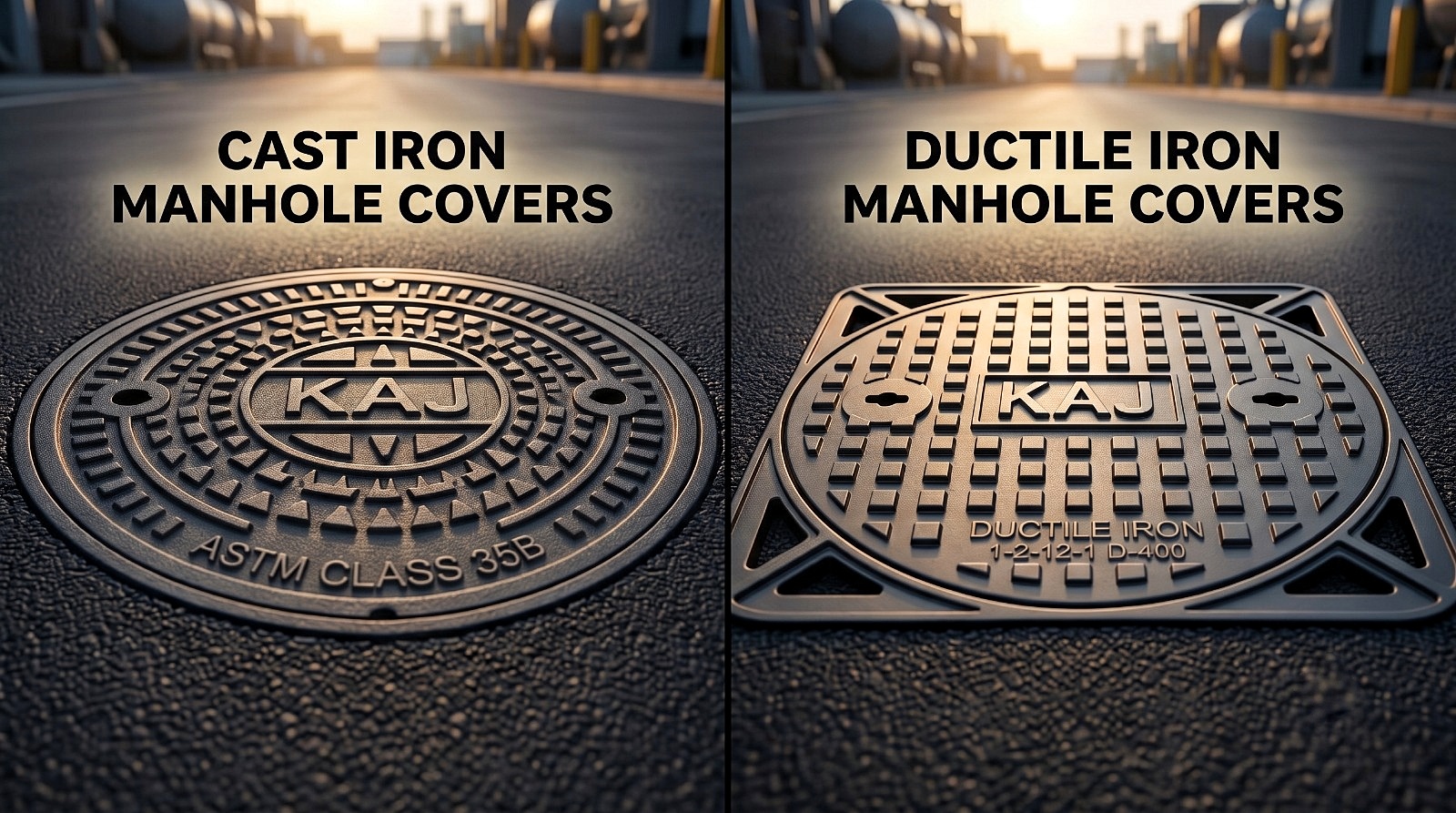
- Cast Iron (Grey Iron): Contains graphite in thin, sharp flakes. These flakes act as natural stress concentrators. While Grey Iron offers exceptional compressive strength, excellent vibration damping, and superior machinability, it has low tensile strength and will fracture under sudden, heavy impact or bending loads.
- Ductile Iron (Spheroidal Graphite Iron): Treated with magnesium or cerium during the melt, causing the graphite to precipitate as rounded nodules or spheres. By eliminating the sharp edges found in flakes, Ductile Iron achieves remarkable tensile strength, elongation, and impact resistance—behaving much closer to structural steel while retaining the castability of iron.
| Property / Feature | Grey Cast Iron | Ductile Iron (SG Iron) |
| Property / Feature | Grey Cast Iron | Ductile Iron (SG Iron) |
|---|
| Graphite Structure | Flakes | Nodules / Spheroids |
| Tensile Strength | Moderate (~150–350 MPa) | High (~400–900+ MPa) |
| Ductility & Elongation | Low (< 1%) | High (5% to 18%+) |
| Impact Resistance | Brittle under point shock | High resistance to shock & dynamic loads |
| Strength-to-Weight Ratio | Standard (requires heavier sections) | Superior (up to 50% lighter for equal load rating) |
| Typical EN 124 Classes | A15, B125, C250 | C250, D400, E600, F900 |
KAJ Cast Iron Solutions: Engineered with Class 35B Metal
For municipal, pedestrian, and standard light-to-medium utility applications, KAJ utilizes high-grade Class 35B Grey Iron.
- High Tensile & Compressive Thresholds: Formulated to exceed typical ASTM A48 / EN standard commercial grey iron baselines, providing a minimum tensile strength of 35,000 psi (~240+ MPa).
- Dimensional Stability & Thermal Mass: Ideal for non-dynamic or low-speed applications where heavy seating weight prevents cover displacement and reduces traffic chatter.
- Natural Corrosion Resistance: Class 35B develops a stable, protective graphite-rich oxide patina that resists environmental weathering and municipal moisture.
KAJ Ductile Iron Solutions: Built for Heavy-Duty Infrastructure
For highways, industrial terminals, container yards, and airports requiring EN 124 D400 to F900 ratings, KAJ manufactures using premier Ductile Iron grades (such as GGG 500-7 / 65-45-12).
- Superior Weight-to-Strength Optimization: Delivers the strength required for dynamic wheel loads up to 400–900 kN while reducing total cover weight by up to 50% compared to equivalent grey iron units. This makes installation and utility maintenance safer and faster.
- Impact & Fatigue Resistance: The nodular graphite matrix absorbs heavy point-impact loads and rapid traffic cycling without cracking or micro-fissuring.
- Precision Seating & Security: High ductility allows for integrated locking mechanisms, precision-machined bedding surfaces, and anti-theft hinge assemblies that withstand high-speed traffic without rattling.
Whether your civil project requires the vibration-damping stability of Class 35B Grey Iron or the high-tensile resilience of premium Ductile Iron, KAJ engineers each casting to strict metallurgical standards to ensure maximum durability, safety, and regulatory compliance.